
Brief History of SIA
After the First World War, the architectural profession was formally organised with the formulation of Singapore Society of Architects in 1923. This body was eventually successful in having the Architects Ordinance passed in 1926. By January 1927, the architectural profession was protected under this Ordinance.
In 1930, a branch was formed in Kuala Lumpur. In 1931, the body was renamed the Institute of Architects of Malaya, with Headquarters in Singapore. The Institute of Architects of Malaya was dissolved in 1961.
In 1949, the Kuala Lumpur branch became an autonomous body – the Federation of Malaya Society of Architects.
In 1958, the Society of Malayan Architects was formed, which was reconstituted as the Singapore Institute of Architects in 1961. SIA was registered under the Societies Act on 5 March 1963 and gazetted on 15 March 1963. The SIA held its first EGM on 14 April 1961.
Established with the objective to promote architectural profession and the built environment in Singapore the Institute is the sole representative of the architectural profession in Singapore.
Key Milestones for the Institute

1966
In 1966, SIA began publishing technical news related to the building and construction industry, in its official publication – the Singapore Institute of Architects Journal. This was followed later by similar articles in the SIA Yearbook.

1967
The formation of ARCASIA (Asian Regional Council of Asia) was first mooted in 1967 at the Commonwealth Association of Architects (CAA) in New Delhi. This was in respond to an urgent need to organize a regional center to look into environmental design, information, research and education in Asia and to foster unity among the six Asian Member Institutes of CAA. The six Institutes comprised HKIA, IIA, IAP, SIA and SLIA and SIA Past President Datuk Lim Chong Keat was the Founding Chairman for ARCASIA. By 2000, ARCASIA had grown to a 17 member institutes.
1969
In August 1969, a “Retrospective Exhibition of the Urban Environment” was held to commemorate the 150th anniversary of the founding of Singapore.
1973
The SIA officially launched the SIA Building Centre project. Momentum gained. In early 1975, Planning Approval was obtained, followed by Building Approval in mid-1975. By November 1975, work began on the construction of the Building Centre. Culminating ten years of planning and effort, SIA Building Centre was completed on 1 April 1976, and officially declared open by Dr. Tan Eng Liang, then the Senior Minister of State for National Development.
1977
In February 1977, 100 projects were selected from more than 200 entries for a full-scale architectural exhibition under the theme “The Architects and the Built Environment”.
1980
SIA published the “Articles and Conditions of Building Contract” which has been widely used in the building industry.
1981
In 1981, SIA produced a book, titled “rumah”, which traced the history of architectural development in Singapore as well as keeping a record of the works of SIA members over a period of time. It covered the one-and-a-half decade to 1981, which was an important period of the physical development of Singapore.
1983
In February 1983, SIA organised an exhibition and conference under the theme “The Role of the Singapore Architects in the 80s and Beyond”. Concurrent with the exhibition, the 1st SIA Architectural Design Award for outstanding design was launched.
1985
“Conditions of Appointment and Scale of Professional Charges” an agreement between the Architect and Client was published.
1986
The Micro Design Awards was implemented in 1986 to recognise and promote excellence in architectural detailing in the design.
1988
In 1988, Mr. S Dhanabalan, then Minister for National Development, opened the new premises for the SIA Secretariat and Building Centre at SMA House.
1995
SIA hosted the 16th ARCASIA Council Meeting and Forum 8 at Westin Stamford.
1995 also saw the implementation of the SIA-Industry Series of awards/competition. The first was the SIA-Hunter Douglas Design Competition, which aimed to encourage the creative and innovative use of Luxalon products and aluminium as building materials. Another industry award launched this year was the SIA-ICI Colour Awards to promote the creative use of colors in Singapore landscape.

1997
In 1997, the Institute introduced the “Friend of Architecture Award” to recognise organisations which have contributed continuously to the Institute and the profession over a period of at least 3 years.
1997 also saw the formation of Construction Industry Join Committee (CIJC), a private sector initiative, to provide quality feedback to government on policies reaction or problem facing the industry. ACES, IES, REDAS, SCAL, SIA, SIBL and SISV were the CIJC founding members.
1998
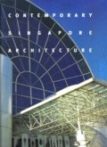
In 1998, the Institute published the “Contemporary Singapore Architecture”. The book traced the development from 1960, covering the better architecture works by members over the past four decades since the 1960s, featuring buildings that the Institute believed had added to the country’s short but rich heritage in the built environment of Singapore.
The SIA-HWA Joint Awards for Handicaps-Friendly Buildings (renamed to SIA-HAW Joint Awards for Community-Friendly Buildings) was also implemented in 1998. There are two objectives. One is to promote the awareness of the public that provision of suitable access facilities can help towards greater independence of the elderly and disabled persons in their everyday lives and their integration with the community. The 2nd objective is to encourage and recognise developers and architects for their initiatives and forethought in providing such facilities.
1998 also saw the inauguration of the Gold Medal Award for lifetime contribution to architecture. The highest award of the SIA, the recipient must demonstrate achievement of sustained and substantial work of architectural excellence and the promotion of the advancement of architecture. He/she must have attained a respected professional standing in society, with personal integrity and be an “ambassador” of the profession. He/she must also demonstrate leadership qualities that provide direction for and enhance prestige of the architectural profession as well as serve as role model that will inspire other architects to emulate. The first SIA Gold Medal Award recipient was Mr. Alfred Wong from Alfred Wong Partnerships Pte Ltd.
1999
In 1999, the Institute acquired its own premises at 79 Neil Road and physically moved in to the new premises in July 2000. The Building was officially opened by Mr. Mah Bow Tan, Minister for National Development on 15 March 2001.
2000
October 2000 saw the Institute establishing a commercial arm, with the registering of SIACAD Pte Ltd. SIACAD Pte Ltd main objective is to provide affordable IT solutions for members as well as the building and construction industry
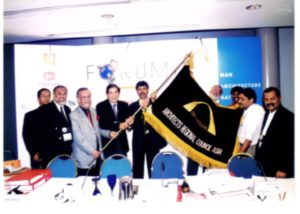
SIA hosted ARCASIA Forum 11 in September 2000 and the theme for the forum was “Man, Architecture, Nature”.
2001
In 2001, the SIA Façade Awards for Design Excellence was introduced with the objective to encourage the innovative use of materials for external cladding.
2002
SIA was appointed in 2002 as agent for BOA to manage the BOA-SIA CPD Programme. This CPD requirement is for the renewal of Practising Certificate This requirement started with a trial run in 2002 & 2003 and became mandatory for the renewal of Practising Certificate in 2004.

2004
In 2004, SIA hosted the inaugural UIA Regional Forum and UIA Bureau Meeting at Biopolis. The theme for the forum was “Sustainability. Mobility. Identity”.
To review the state of the architecture profession, consolidate our concerns and strategise to chart the course for the development of our profession for the next decade, SIA formed a taskforce in 2004 to draft a Blueprint for the Architecture Profession.
The blueprint for the architecture profession was implemented with the mission to create conditions and foster an environment with a passion for excellent architecture that promotes Singapore as a vibrant city with an “X-factor” where excellent architecture thrives. This mission is driven by 4 strategic thrusts:
Pro-Design
Pro-Enterprise
Social and Custodian Role
Education and Research

2005
SIA and Getz Bros & Co. (S) Pte Ltd launched the “SIA-Getz Architecture Prize for emergent architecture in Asia” in 2005. The biennial prize honours an architect who has significantly contributed to the progress of architecture in Asia, much as the Pritzker Prize has for the worldwide community of architects.
2005 also saw the Institute taking the lead to organise, on behalf of MICA, the Singapore Pavilion for the Biennale Sao Paulo, an exhibition showcasing the theme, “Living in the City”. A publication 699.1 was published in conjunction with exhibition.
2006
In 2006, as part of the private industry effort to provide assistance in the rebuilding phase of the tsunami hit areas, SIA under CIJC collaborated with Singapore Red Cross to focus on the rebuilding efforts in Republic of Maldives and Sri Lanka. As part of this aid-programme, a 4-storey Singapore School at Hulhumale was completed in 2007 and the refurbishment of 3 schools in the district of Hambantota, Matara and Galle were also done in 2008.
2007
The inaugural ArchiFest was held in November 2007 for the city to celebrate the built environment. The main aim of the festival is to provide a platform to breed of a vibrant design culture, and consequently a design conscious society, by encouraging and guiding the general public and design professionals of all fields to interact in a fun and free atmosphere.
2008
At the 23rd UIA World Congress in Turin, Italy, SIA, with the support of the Ministry of National Development (MND), Urban Redevelopment Authority (URA) and the Singapore Tourism Board (STB) submitted its candidature to host the UIA World Congress, General Assembly and related events in 2014. Singapore lost the bid to Durban, South Africa.
2009
PUSH Award was launched at the SIA Annual Dinner to recognize and honor the “Best of the Best” from the design sector who are pushing design to its limit, to stretch creativity, imagination and breakthrough and reach greater height.
2009 also saw the formation of the SIA Young Architectural League to represent the voice of the younger group of members.
2010
In 2010, SIA was commissioned by the Government (through Design Singapore Council) to lead, manage and execute the Singapore’s presentation at the 12th Venice Biennale International Architecture Exhibition (VBIAE). This is the first time that a private organisation is taking the lead in the Singapore’s presentation at Venice Biennale, which hitherto had been undertaken by MICA itself. A book, titled “1000 Singapores” was also produced to augment the presentation.
2010 also saw SIA released a position paper on “Attributes of a Sustainable Built Environment”. The position paper articulated the architect’s approach to a sustainable built environment. Implicit in these attributes is a multi-disciplinary, multi-stakeholder, whole-life perspective, reflecting the complexities of how the built environment is managed from concept to end-of-life.
Another highlight of 2010 was the acquisition of the adjacent unit 81 Neil Road upon an approval from the general membership at an EGM held on 22 November 2010. This purchase was completed on 8 February 2011.
2011
With the support from URA, DSg and STB, the Institute has submitted its candidature to invite UIA to host the 2017 UIA World Congress in Singapore. The bid presentation was held in September 2011 in Tokyo. Singapore lost the bid to Seoul, South Korea.
2011 also saw SIA organized 3 design competitions for MUIS for the A&A Al-Ansar and Punggol Mosques and for National Heritage Board for the Indian Heritage Centre. Such competitions attracted many submissions, and had benefited our member firms; two of these design competitions were won by small and medium-sized firms.
2012
In 2012, the Minor Works Contract was completely revamped, updated to reflect current operating environment with more comprehensive content, and is user-friendly and easy to use.
2013
2013 was a year of major significance for SIA as we celebrated our Institute 50th anniversary of establishment. Various events and activities commemorating this milestone took centre stage during the year, some of the key and particularly meaningful ones included – 50th Anniversary Gala Dinner held on Friday 17 May 2013 at the Resorts World Sentosa Compass Ballroom.
Launch of “I AM ARCHITECT” campaign at the Anniversary Dinner where the video, “I AM ARCHITECT” was shown. This campaign was reinforced through the launch of the new SIA Website, social media, SIA Newsletter, as well as a “I AM ARCHITECT” ST Supplement. In addition, this video was shared at the Arcasia event in Kathmandu, and received popular feedbacks and multiple requests from Arcasia Institutes to reuse for their institute’s promotion of architecture and the architectural fraternity as a whole.
Production of a SIA 50th Anniversary Book titled “RUMAH”, which stands for “Review of Urbanism, Modern Architecture & Housing”. This publication documents the 50 years story of Singapore Architectural Profession as it evolved from its roots during the colonial period, through the nation building phases of Singapore, to how the profession confronts current challenges of a globalised urban environment.
Launch of SIA New Website, which was re-vamped to enhance its user-friendliness, enabling greater ease of navigating and locating relevant information regarding the institute and its activities.
Launch of Singapore Architects, SA Website – which capitalises on the digital platform to extend its reach to the international audience. The Website is able to collectively present SA articles across a library of architecture related topics and projects relevant to local architects. The refreshed web interface is also intended to share latest architectural information and news immediately with its readers, with online subscription also made available on the website.
Presentation of a Lamy Pen Set to members, as a token of appreciation for their continued support and contribution
Tree Planting – In conjunction with the 50th Anniversary of Singapore Tree Planting Movement, members of SIA also planted 50 trees and contributed $10,000 to the Garden City Fund in support of the Movement, which was started 50 years’ ago by our Minister Mentor Lee Kuan Yew
2013 also saw the launch of the G-Architect (Green Architect) Award implemented together Uniseal Pte Ltd, in October 2013, to honour and bestow annually an Asian architect. The G-Architect is an individual who, through his or her body of built and/or theoretical projects, advances and advocates the theory and design practice of sustainable architecture. Mr. Leung Man Kit, Director of Sustainable Design, Ronald Lu & Partners (HK) was the first recipient for the Award.
In order to address problems faced by the architectural fraternity in architectural detailing, a new programme, on Architectural Detailing and Specifications Course (ADSC), was launched in October 2013. This Course aims to raise the general awareness and standard of architectural detailing in the profession, in particular among younger architects. ADSC comprises 12 sessions. Hitherto, 30 participants had undertaken the training.
2014
After extensive deliberation, Council decided to embark on a major renovation of SIA premises integrating units 79 and 81 into one bigger combined space. This will lead to more effective utilisation of the 2 units. Through an open design competition, DP was appointed as the architect for the renovation works.
One salient feature of the renovation is to create affordable space for use by young architects embarking on their career. The Theatrette will be located at the 3rd storey, SIA Secretariat office will be at 2nd storey and the ground floor will be for rental. There will be a platform lift for use by those with lesser mobility.
The renovation is projected to be completed by August 2015.
2015
September 25, 2015 is a memorable day and a key milestone for the institute and the architecture fraternity as we celebrate the opening of our newly renovated premises @ 79 Neil Road by SIA Patron, Dr. Albert Hong and the return of Archifest, our annual festival to celebrate architecture and the built environment.
The New SIA Premises, after a one-year long renovation, had finally come into fruition with lots of brand facilities like the CoLAB, lounge and training room. The festival village for Archifest 2015 was intentionally held at SIA Premises to create more buzz and showcase the bigger and better premises. SIA welcome all members to take advantage of all the new facilities and make this the hub for architects and designers to meet, share and network.
2016
August 1, 2016 saw a new beginning for SIA secretariat, with Mr. Fong Hoo Cheong joining the Institute as its new Executive Director and Mr. Ow Chin Cheow relinquishing his duty with effect from March 1, 2017 after 24 years of service to SIA as Executive Director.
2017
Strengthening Professional Practice and Member Connectivity
2017 marked a pivotal year for SIA as it advanced both professional standards and member engagement. To support industry excellence, SIA introduced the SIA Building Contract 2016 and launched a Train-the-Trainers Programme, empowering architects to deliver courses on contract administration and promote best practices across the profession. In parallel, SIA rolled out a Members Dashboard, th SIA Members Online (SMO). This web-enabled platform streamlined access to personal records, CPD tracking, and online payments. These initiatives underscored SIA’s commitment to building a stronger, more connected architectural community. Looking ahead, SIA will further enhance accessibility with the introduction of an online membership application system.
2018
Advancing Transformation through the SIA Industry Transformation Map (ITM)
SIA deepened its commitment to shaping the future of the architectural profession by developing Work Plans under the SIA Industry Transformation Map (ITM). Guided by the key pillars of transformation, the Practice Thrust undertook a strategic review of architectural practice: examining how architects deliver professional services, create value for clients, and contribute to Singapore’s evolving economic and social landscape. This forward-looking initiative reaffirmed SIA’s resolve to position the profession as an essential partner in driving innovation, productivity, and societal relevance within the built environment sector.
2019
SIA Transformation Map: Building a 3-Year Strategic Roadmap for the Future
In alignment with Singapore’s national transformation agenda led by the Future Economy Council (FEC), SIA advanced its own transformation journey in 2019 through the development of a 3-Year Strategic Roadmap under the SIA Industry Transformation Map (ITM). Supported by DesignSingapore Council, this roadmap aimed to strengthen industry-led programmes that enhance professional capabilities, raise design standards, and promote the architectural sector. SIA engaged Ernst & Young (EY) Singapore to translate the ITM into four key initiatives: (1) establishing the SIA Academy as a hub for lifelong learning and regional knowledge exchange; (2) developing a Skills Framework to map evolving roles, competencies, and career pathways for architects; (3) implementing a Digital Agenda to build digital capabilities and create exportable design tools for a liveable, sustainable future; and (4) fostering Collaboration and Internationalisation to strengthen regional partnerships, bridge academic and industry gaps, and position Singapore Archifest as a regional anchor festival. Together, these initiatives laid the foundation for SIA’s continued evolution as a forward-thinking, globally connected professional body.
2020
Resilience and Renewal Amidst a Global Crisis
2020 marked a pivotal moment for SIA, navigating one of the most challenging periods in recent history. During the height of the COVID-19 pandemic, the Council acted swiftly to sustain connection and advocacy within the profession. Weekly Thursday Townhall sessions, a new WhatsApp broadcast channel, and digital engagement through newsletters and social media kept members informed and united during uncertainty. Behind the scenes, SIA intensified agency collaborations with URA, BCA, LTA, and other partners to address pressing industry concerns, while advancing initiatives in education (ITE/SIA Work Study Diploma) and professional opportunities (ESG Pact, CYF and Geylang Serai competitions). The groundwork laid in 2020, including spanning digital outreach, advocacy, and industry transformation, set the stage for continued progress under upcoming initiatives such as ITM 2.0, SIA Integrated Website, and the SIAA Online Learning Platform.
2021
Rebuilding Momentum and Strengthening the Profession
SIA went through a year of recovery and renewal as the profession emerged from the pandemic’s challenges. With active member participation through Townhalls, surveys, and direct feedback, the Institute successfully advanced several key initiatives that strengthened advocacy, education, and engagement. Working closely with government agencies, SIA secured the extension of the Job Support Scheme, promoted pandemic-resilient contracting practices, and championed the harmonisation of plan measurements across authorities. The year also marked the launch of the Academy.SIA, a cornerstone for continuous professional development, alongside the ITE Work-Study Diploma in Architectural BIM & Design and new MOUs with regulatory partners. Member engagement deepened through initiatives such as the inaugural Architectural Specifier Market, YAL Mentorship Programme, and the launch of the new SIA website. Together, these efforts reaffirmed SIA’s commitment to empowering architects, elevating professional standards, and shaping a resilient, future-ready built environment.
2022
Articulating the Value and Future of Architecture
SIA set its focus on the theme “The Future of Architecture” in 2022, underscoring the need for bold, forward-looking responses to the evolving challenges facing the profession. Through the Membership Engagement Initiative, dialogues were held with firms of varying scales to explore how architectural practice is evolving and what the future of the profession might hold. Insights from a nationwide survey of young architects revealed that only 7% expected to remain in the profession for their entire career. This prompted a critical reflection on the sustainability of architectural practice. In response, SIA launched the Value Articulation Framework (VAF), a key initiative aimed at redefining how architects articulate, measure, and sustain the value of their work by revisiting cost structures, revenue models, and professional worth. The year’s theme also shaped SIA’s major events, including the Practice Convention 2022, held alongside the Architectural Specifier Market, and Archifest 2022, which expanded conversations beyond design to explore architecture’s intersection with culture, philosophy, and global affairs.
2023
Celebrating SIA60: “Tomorrow, Today”
SIA proudly celebrated its 60th anniversary, themed “Tomorrow, Today”. The milestone kicked off with an event logo competition that attracted over 40 entries from members across various fields. The celebration culminated in a birthday dinner on 15 March 2024 at Golden Mile Complex, bringing together architects from agencies, IHLs, diverse practice firms, and past presidents to honour the heroes of Singapore architecture, past and present. As part of the SIA60 initiatives, SIA also digitally updated the Genealogy of Architectural Practices in Singapore (GAPS), transforming this historical record of local architectural lineage into an accessible online format for the first time.
2024
Singapore Archifest (SGAF), VAF Blueprint, and Advocacy in Action
Riding on the momentum of SIA60, SIA advanced its mission across multiple fronts in 2024, building up to Singapore’s 60th birthday in 2025. Singapore Archifest (SGAF) 2024 was bigger and bolder than ever, with a three-day programme at Marina Bay Sands featuring conferences, seminars, exhibitions, and a trade expo, welcoming participants from across Asia, government agencies, academia, and trade associations. The SIA Architectural Design Awards went regional for the first time, while the inaugural Young Architect Award celebrated emerging talent.
A major milestone was the launch of the Value Articulation Framework (VAF) Blueprint, equipping architects with practical tools to communicate the value of their services and redefine professional cost structures and revenue models.
On the advocacy front, SIA played a pivotal role in the MND Ministerial Taskforce, contributing to discussions on professional well-being, talent retention, fees, and salaries, ensuring architects and engineers remain valued contributors to Singapore’s built environment.
Through these initiatives, alongside extensive member engagement, regional collaboration, and over 400 CPD-accredited events in Singapore, SIA reaffirmed its commitment to shaping a vibrant, sustainable, and forward-looking architectural profession.